Justin B. Bordner
Founder & Chief Executive Officer
Architect and sole engineer of the Chronic Trace platform, end to end · Lead inventor of its proprietary d-CIIV fusion methods
We close that gap. An objective concussion and TBI measure, from a single session on a device the patient already owns.
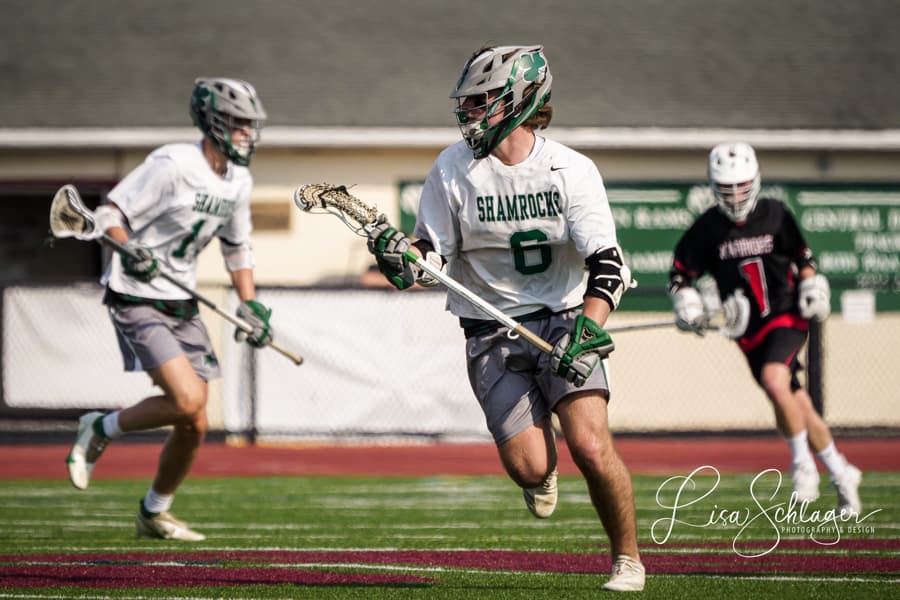
Concussions since elementary-school football and middle-school lacrosse. Twenty-plus times in my career I took a hit, felt my brain shake and my vision vibrate, and kept playing anyway.
I know the loopholes because I used them.
I faked impact tests. I gamed the balance and Sway screens. So did people I played with. Not because anyone was negligent, but because the system asks an athlete who loves the game to self-report the one thing that takes them out of it. That is a structural problem, not an athletic-trainer problem.
I have a history of mild and moderate TBIs. I came out of it fine. I understand this market from the inside.
Spring 2026 I took another one. I stepped away from the game I love, for good, and went all in on Chronic Trace. This is no longer something I do on the side. It is the whole thing.
We need something cheap, usable by anyone, available right there on the sideline, and hard to fake. That is Chronic Trace. Let us make a difference.
Architect and sole engineer of the Chronic Trace platform, end to end · Lead inventor of its proprietary d-CIIV fusion methods
Co-inventor of the Chronic Trace patents · 40+ years in U.S. defense systems-safety at BAE Systems (TRIDENT, Ohio-Replacement, CVN-78, MIL-STD-882). As Chief Innovation Officer, he pairs that mission-critical rigor with a builder's instinct for what comes next, shaping the ideas and roadmap that carry the platform forward.
Ph.D. Neuroscience (Brandeis) · Postdoctoral, Tufts University School of Medicine · Neurophysiology, EEG, and biomarker research · Advises on the neuroscience behind our measures and our signal-analysis approach
Ph.D. · Active NIH Principal Investigator with $8.4M+ in federal grants across NIH, HRSA, and NSF · Guides our federal grant strategy and the research infrastructure that turns funding into running studies
Research-methods rigor on our first validation study · Study design, endpoints, and IRB · Coordinates the academic site and athletic-training partnerships
Ph.D. Neuroscience · University of Rochester Medical Center · Guides our clinical development, biomarker strategy, and regulatory pathway, and pressure-tests the science behind the platform
MIL-STD-882E system safety engineer supporting U.S. Navy programs at NSWC Dahlgren and NUWC Newport · Brings safety-critical systems rigor to how we assess and document risk
VP Global Security, M6 Global Defense · Former Assistant Director, U.S. Secret Service · Brings federal procurement, operational readiness, and organizational leadership as we scale into government and defense
21-year U.S. Army officer · Drives our federal business development and defense capture strategy
U.S. Marine Corps veteran · Leads our Ukraine deployment across hospitals, the frontline, and civilian care, capturing data where the need is greatest
Clinical and scientific advisory board in active recruitment across sports medicine and CTE research, TBI rehabilitation, military neurotrauma, and planned FDA Biomarker Qualification Program engagement.
Capturing baselines in the cohorts where the gap between exposure and assessment is widest.
Active-roster fighters captured between bouts. Sub-concussive exposure profiling, personal baselines across training cycles.
Repeated head-impact exposure across a season. Personal baselines tracked through every contact week.
Blast and impact exposure. Longitudinal coherence tracking under field conditions.
Research-stage platform, positioned as decision-support only, not diagnostic. Results require clinical interpretation, and clinical decisions remain with licensed healthcare professionals.